
Case Study – Christian Retreat Center
Powering Ministry with 190% Solar Energy
Overview – East Waterford, Juniata County, PA
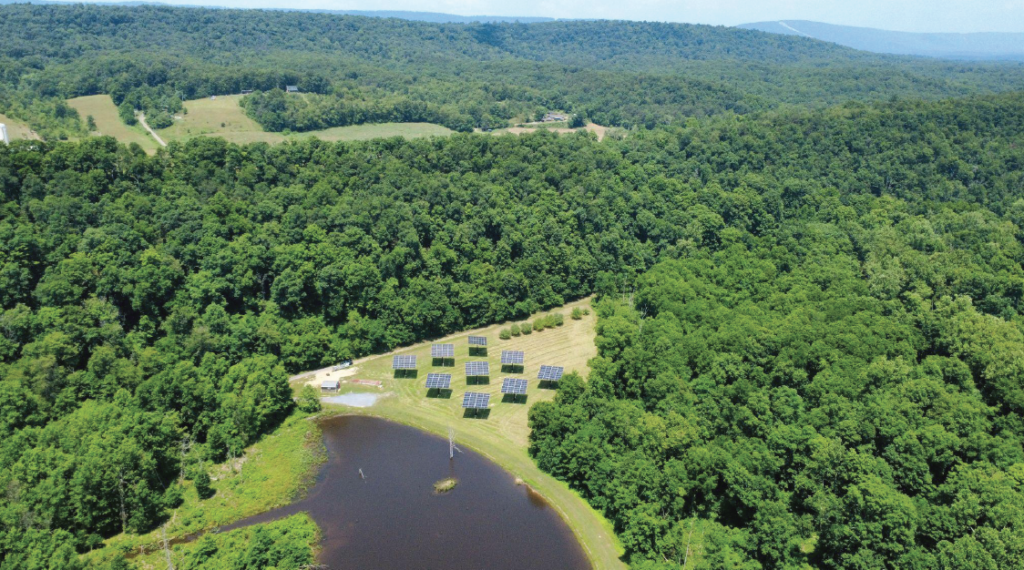
The Christian Retreat Center (CRC) is a nonprofit ministry that operates year-round, serving the community through Youth Camps, retreats, and mission services in the beautiful, rural setting of the Tuscarora Mountains. Utility costs across a multi-building campus were a significant burden on their operational budget, money that could otherwise go toward their ministry.
CRC partnered with Trifecta Solar to design a system that would cover the energy use of the entire campus, not just a single building, and do it with the fastest possible return.
The Challenge
CRC is a high-energy user with numerous facilities: lodges, dining halls, cabins, and activity centers. As a nonprofit, every dollar CRC spends on utilities is a dollar not spent on programming. But the bigger obstacle was structural: each building sits on its own utility meter, which is the problem most multi-building campuses run into. A solar array can only offset the meter it is connected to. Covering the whole campus the conventional way would mean a separate system on every roof.
The site also had limited suitable roof space, and roof-mounted or fixed-tilt ground systems would not reach the production target on the land available.
The Trifecta Solution
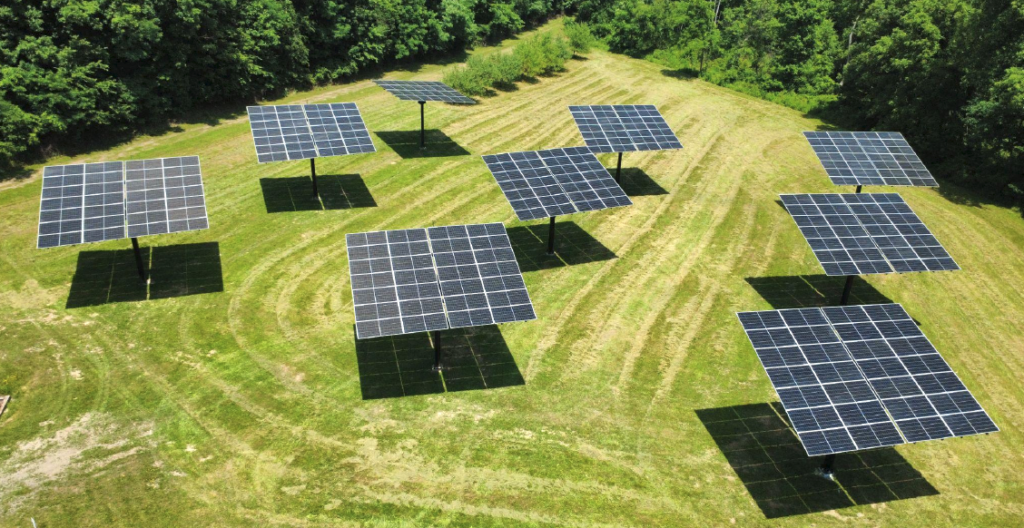
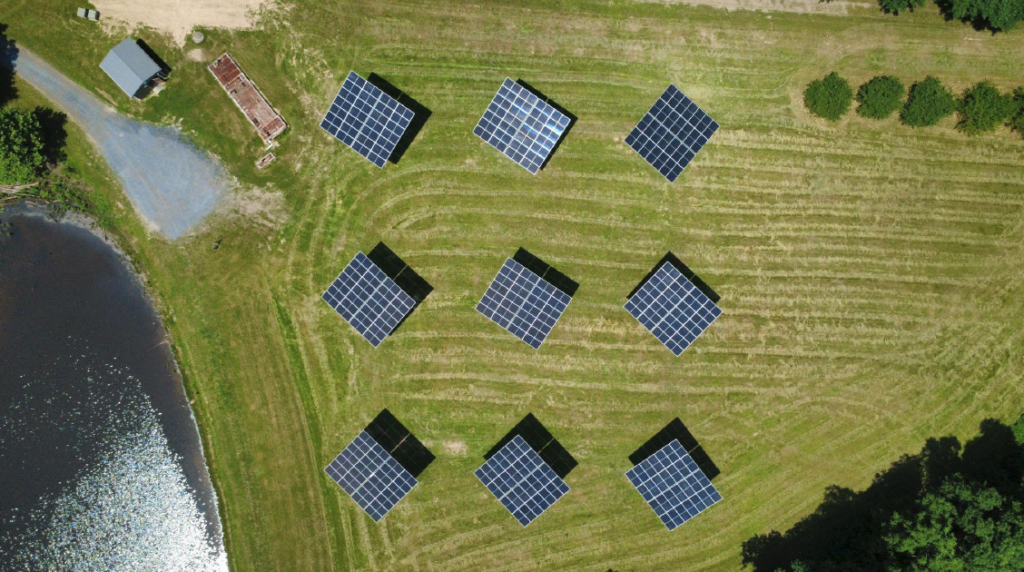
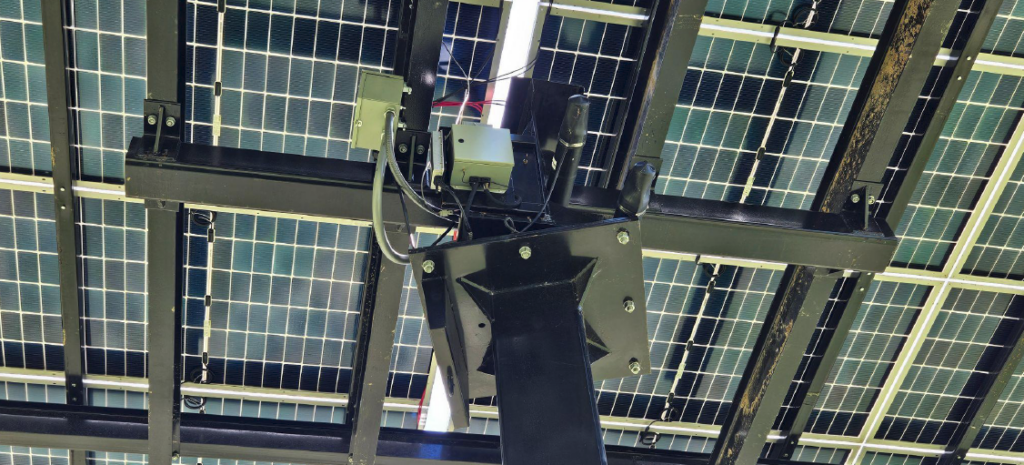
Trifecta Solar designed and implemented a high-efficiency ground-mounted system leveraging advanced tracking technology to maximize solar capture throughout the day and across seasons.
|
147 kW
System Size (DC)
|
252
Solar Panels
|
303,282 kWh
Annual Production
|
|
190%
Energy from Solar
|
9
Dual-Axis Trackers
|
5 Year
Discounted Payback
|
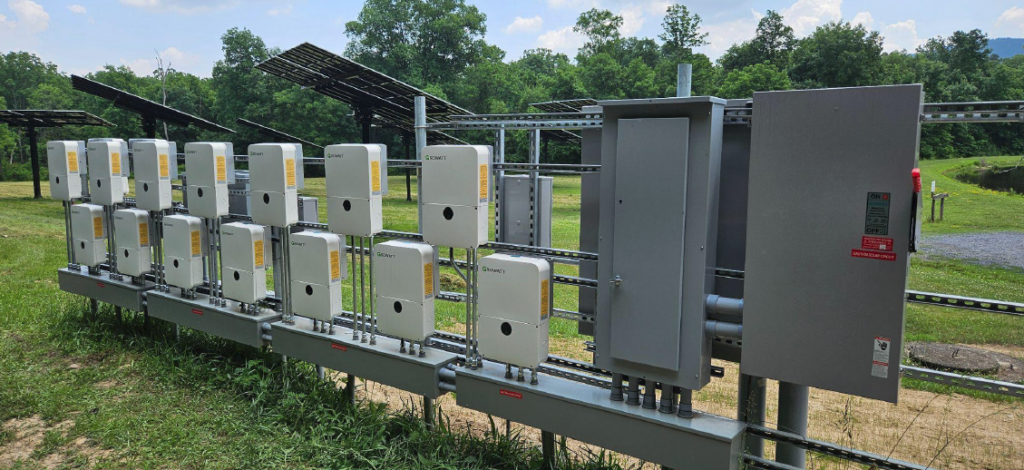
The system is rated 136.8 kW AC across eighteen Growatt inverters.
Virtual Net Metering: One Array, the Whole Campus
The single most important design decision on this project was not the trackers. It was virtual net metering.
Pennsylvania allows a customer-generator to apply the output of one solar array against multiple meters they own, provided those properties are within two miles of the generating property and served by the same electric distribution company. Instead of building a separate system on every building, CRC built one array in an open field and applied its production across the campus, including the dining hall and the lodge.
For a retreat center, a school, a church campus, a farm with multiple services, or a municipality, this changes what is possible:
- One system instead of many. A single, well-sited array replaces a half-dozen compromised rooftop installations.
- Site for production, not for proximity. The array goes where the sun is best and the ground is open, not wherever a roof happens to face.
- One interconnection, one permit set, one maintenance point. Simpler to build, simpler to own.
- Buildings that could never host solar still get the benefit. Shaded roofs, historic structures, and small outbuildings are all covered.
Virtual net metering is underused in Pennsylvania largely because most installers do not offer it. It requires coordinating meter accounts, utility paperwork, and interconnection in a way a single-building residential install never does.
Building the Service
A 147 kW array producing over 300,000 kWh a year needs service capacity to match, and the existing service at CRC was not built for it.
Trifecta coordinated with the utility, Penelec, to bring in two new services totaling 800 amps: a 600 A service and a 200 A service. The array’s eighteen Growatt inverters are mounted on a purpose-built rack at the array with their own disconnects and combiner gear, feeding back through the new service equipment.
This is the part of a commercial project that separates a residential installer from a commercial one. Sizing, permitting, and coordinating new utility services at this scale is a different discipline than mounting panels.
The Power of Dual-Axis Tracking
A dual-axis solar tracker is an electromechanical system that continuously adjusts panel orientation to follow the sun’s path in two dimensions: horizontally from east to west across the day, and vertically as the sun’s altitude changes from sunrise through solar noon and back down toward sunset.
A fixed-tilt array is aimed at one compromise angle and is only pointed correctly at the sun for a few minutes a day. A dual-axis tracker holds the panels near perpendicular to the sun continuously.
By perfectly aligning the panels to face the sun at a 90-degree angle throughout the day, these trackers provide a significant boost to overall production, often delivering 35% to 45% more energy per installed panel compared to a fixed-tilt counterpart.
What that delivers at CRC:
-
- Extended peak production. Panels reach near-peak output early in the morning and hold it late into the evening, widening the daily production window rather than producing a narrow midday spike.
- Seasonal optimization. The trackers follow the sun’s changing altitude through the year, staying optimally aimed in low winter sun as well as high summer sun.
- Better use of land. Nine tracked arrays produce what would require substantially more fixed-tilt racking and ground area.
The 252 panels on nine tracked poles are projected to produce 303,282 kWh annually, roughly 2,058 kWh per kW of installed DC capacity. A fixed-tilt system of the same size on the same site would produce meaningfully less.
Results and Impact
The solar system at the Christian Retreat Center is projected to generate over 300,000 kWh annually, roughly 190% of their current consumption.
Consumption is offset at full retail value, and generation beyond consumption is credited at the utility’s price-to-compare rate at the annual true-up. Sizing to 190% covers the campus’s full usage with headroom for future growth, added buildings, and electrification.
- Mission support. Operational savings on utility costs go directly back into CRC’s youth camps and mission programs.
- Room to grow. The surplus means CRC can add load, electrify equipment, or bring new buildings onto the campus without outgrowing the array.
- Stewardship. CRC’s energy use now matches the values of the organization.
CRC stands as a model for nonprofits, camps, schools, and multi-building campuses looking to cover an entire property with a single well-designed system.
Tags
- Non-profit
- Pole-mounted (ground-mounted system), (9) Dual-axis trackers

Have Questions? Call us at 877-345-2470
We want to ensure you are well-informed about our product line and how it can save you money on your monthly energy bills.