
Pennsylvania Update
What Is Plug-In Solar?
Plug-in solar is a small solar kit that plugs into a regular wall outlet. As of October 6, 2026 it is not covered by any Pennsylvania law, and House Bill 1971, which would legalize it, is still in committee.
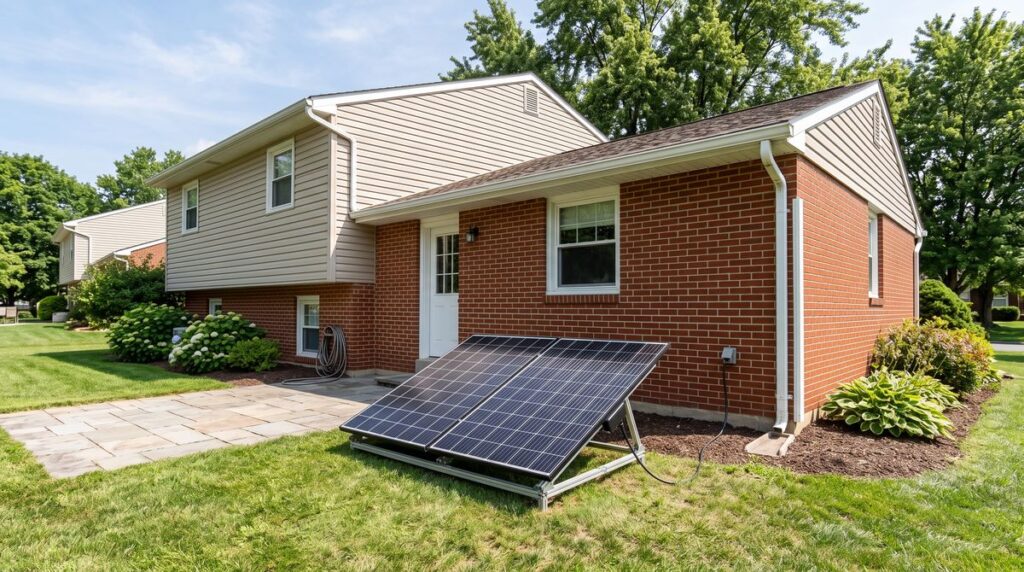
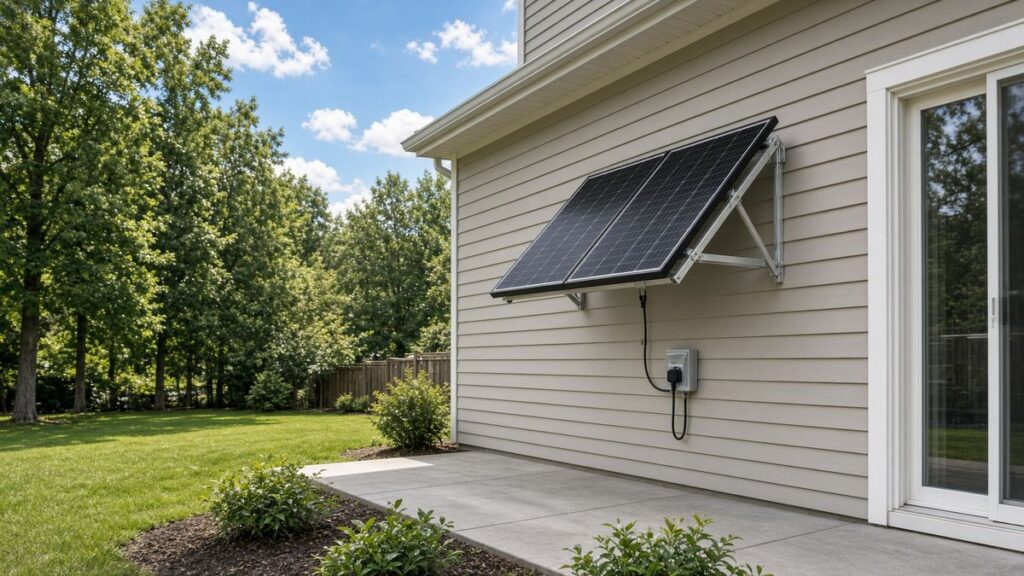
A plug-in solar system is one or a few solar panels paired with a small inverter and a standard plug. You set the panels in the sun and plug in. The power they make flows into your home's wiring and offsets electricity you would otherwise buy from the utility.
Most kits run from a few hundred watts up to about 1,600 watts, far smaller than a typical rooftop system. Like any grid-tied inverter, the unit shuts off when the grid goes down, so it will not power your home during an outage.
Balcony Solar and Other Names
Plug-in solar is also called balcony solar, plug-and-play solar, backyard solar, plug-in PV and mini solar. In Germany, where more than a million systems are installed, they are known as Balkonkraftwerke, or balcony power plants.
Is Plug-In Solar Legal in PA?
Other states. Utah was the first state to pass a plug-in solar law, in 2025. UL Solutions published UL 3700, a safety standard aimed at these products, in January 2026. About 10 states in total have passed laws allowing plug-in solar, with most states considering bills.
What PA HB 1971 Would Do
As introduced, the bill defines a portable solar generation system as one that is:
- Limited to 1,200 watts of power back to the grid
- Designed to connect through a standard electrical outlet
- Intended mainly to offset the customer's own electricity use
- Certified by UL or an equivalent nationally recognized testing lab (the bill names no specific standard)
For those systems, the bill would:
- Remove the interconnection application, interconnection agreement, utility inspection and interconnection fees
- Bar the utility from requiring prior approval, registration or notification
- Make the system ineligible for net metering, with no credit or payment for power sent to the grid
- Shield the utility from liability for damage or injury caused by the system
- Require installation per the manufacturer's instructions and applicable local building and fire codes
- Take effect 60 days after it becomes law
Pennsylvania HB 1971
What HB 1971 Would Not Change
Practical Tips for Plug-In Solar
One side of your panel. A 120-volt plug-in unit feeds only the side of a split-phase panel that its outlet is on. If it makes more than that side is using, the excess goes to the grid or excess output is reduced by the inverter, and under HB 1971 earns no credit from the utility. Placement and sizing matter.
Mounting considerations. Solar panels are sails. Racks, ground stands and attachments to walls, fences or deck rails need to be built for storm winds, and permit rules for them vary by municipality.
Value comes from self-use. Because exported power earns no credit, a plug-in system pays off by running while your home is using power.
Considering Plug-In Solar?
Plug-in solar is designed for small offsets. If you want to cover most of your electric use, a permanent, permitted system is still the way to do it, and that is what we install. Until a law changes, we do not recommend connecting a grid-tied unit without your utility's approval. We are following HB 1971 and will update this page when its status changes.
When plug-in solar is legal in Pennsylvania, Trifecta Solar will be able to design and install a safe, properly mounted plug-in solar system for you if a full rooftop or ground-mount system isn’t a good option.
Want backup power too? Learn about home battery storage, or see how net metering works in Pennsylvania. Ready to talk about a full system? Contact Trifecta Solar.

Have Questions? Call us at 877-345-2470
We want to ensure you are well-informed about our product line and how it can save you money on your monthly energy bills.