
Roof-Mounted Solar FAQ
Do I need a new roof before going solar?
Not always. If your roof has plenty of life left, we can install on it as is. If it's near the end of its life, we'll recommend replacing it first so you don't pay to remove and reinstall the panels later.
How do you protect my roof?
Every attachment uses self-sealing mounts, such as HUG-style feet, so your roof stays watertight and protected. Your roof is also covered by our 10-year workmanship warranty, roof penetrations included, so you never have to wonder who's responsible.
Can you install on a metal roof?
Yes. On standing-seam metal roofs we can often clamp to the seams so the roof isn't drilled. On other metal roofing, we attach to the raised rib or the purlins underneath, always with a sealed foot.
What if my roof is shaded or faces north?
We'll look at it honestly. East- and west-facing roofs can work well, and a north-facing plane with a shallow slope can still produce meaningful power. Other times a ground mount or dual-axis tracker is the better choice.
Roof-Mounted Solar Panels
Why Most Homes Go Rooftop
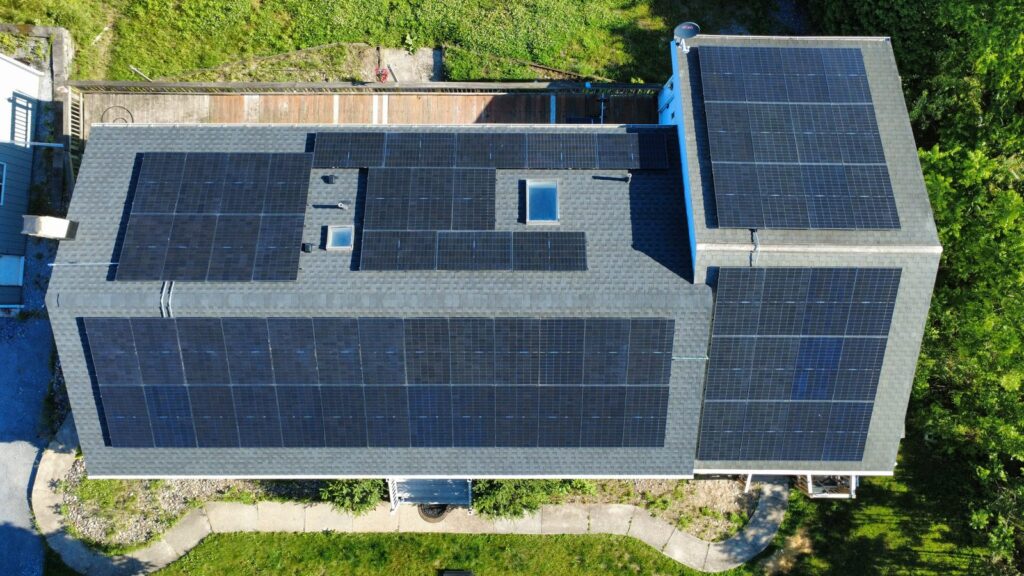
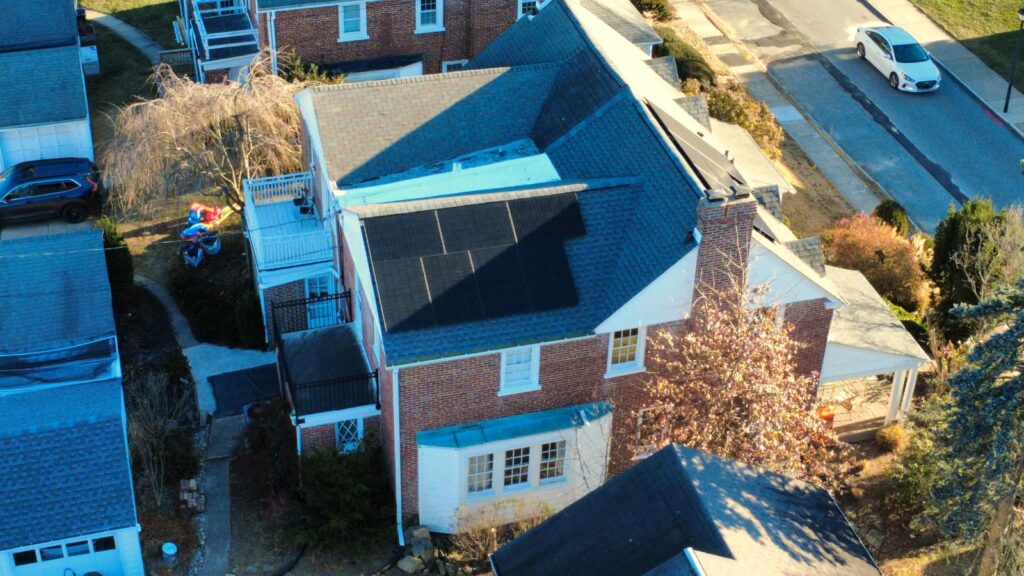
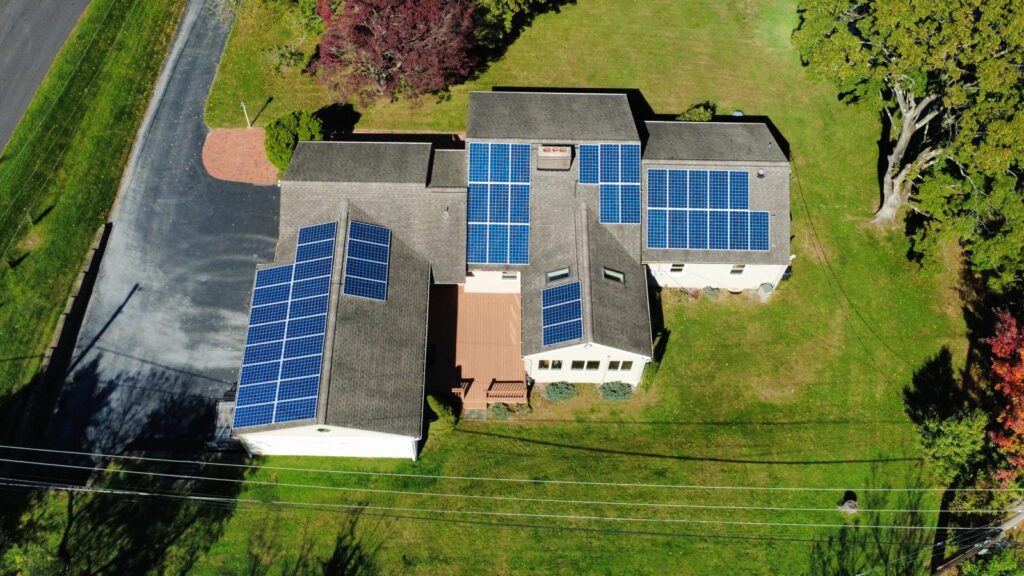
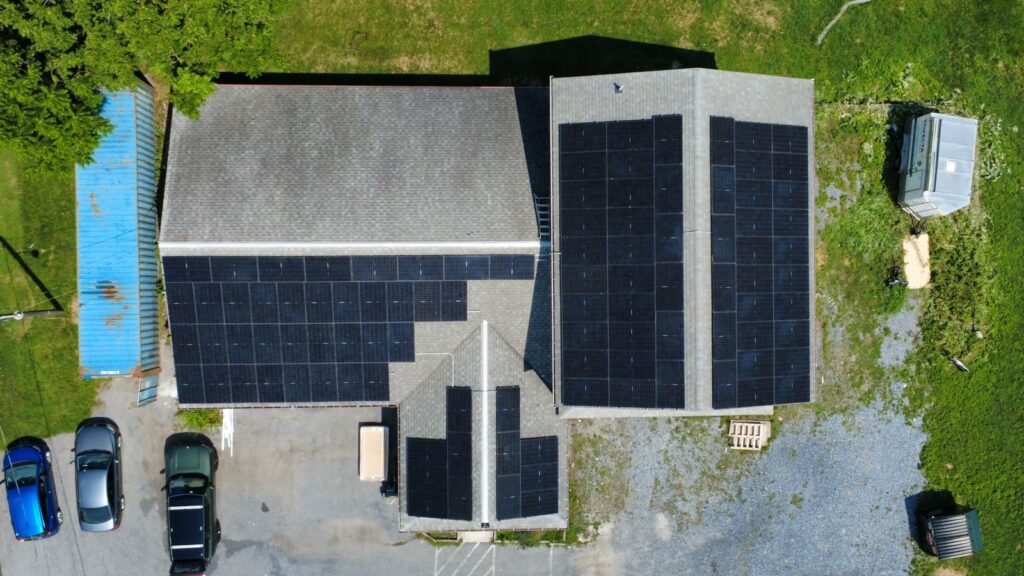
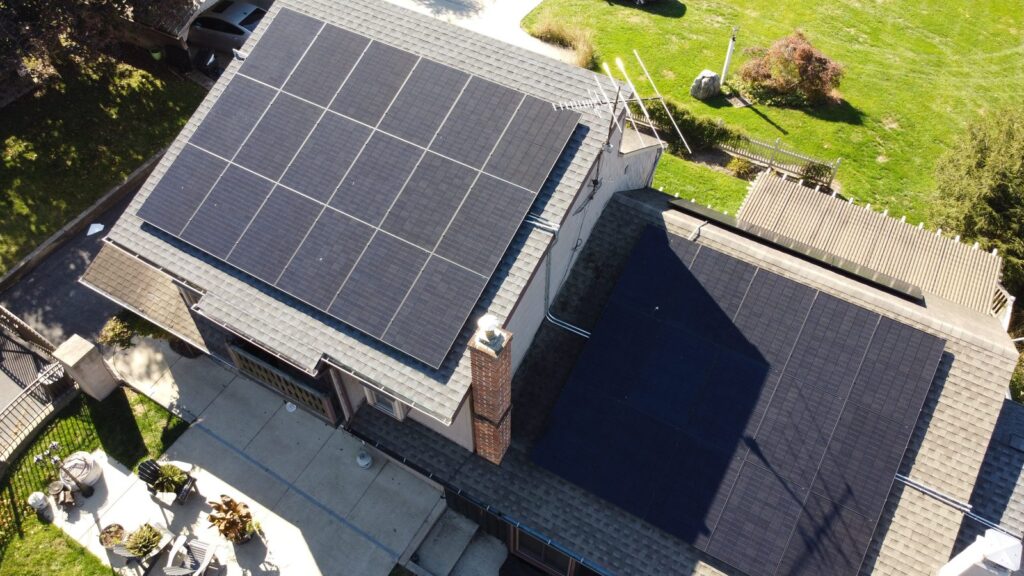
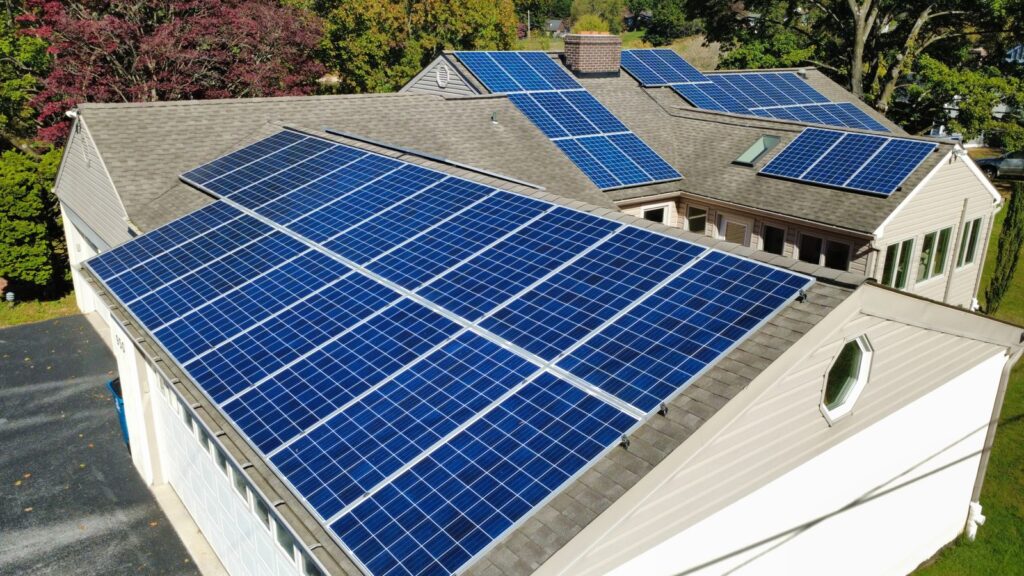
For most homeowners and businesses across Central and Eastern Pennsylvania, the roof is the simplest place for solar. It's already there, it's usually clear of the yard, and the wire run to your electrical panel is short. A roof-mounted system doesn't take up lawn, garden, or pasture, and in most cases it's the lowest-cost way to put panels on your home or business.
That said, not every roof is a good fit, and we'd rather tell you that up front than install on a roof that isn't ready. If yours isn't, a ground-mounted system or a dual-axis tracker may be the better choice.
Is Your Roof Ready?
Age and condition. Panels stay on a roof for decades. If your shingles are near the end of their life, it usually makes sense to replace the roof first. Taking panels off and putting them back later adds cost you can avoid. During the site visit we look at the age of the roof, soft spots, and anything that should be fixed before we mount to it.
Shingle or metal. On asphalt shingle roofs, racking attaches to the roof framing with sealed mounts, such as the IronRidge HUG foot. On standing-seam metal roofs, we can often clamp to the seams so the roof doesn't have to be drilled at all. On other types of metal roofing, we can attach to either the raised rib or the purlins underneath, always with a sealed foot. Other roof types are handled case by case.
Flashing and penetrations. Every place we attach to the roof is flashed or sealed. Our workmanship warranty covers those penetrations, so if a leak is ever traced to our work, we come back and fix it.
When the roof isn't the answer. A heavily shaded roof, a roof that faces the wrong way, or not enough usable space can all point to a ground mount instead. We'll show you both options when it makes sense.
Sun, Shade and Orientation
South-facing roofs produce the most over a year, but east- and west-facing roofs can work well too. A west-facing array produces more in the late afternoon, which can be useful depending on how you use power. Even a north-facing roof plane, if the slope is shallow, can produce meaningful power depending on your needs.
Shade matters more than most people expect. Trees, chimneys, dormers, and neighboring buildings all cast shadows that move through the day and the seasons. We design around the shade you have, and in some cases trimming a tree makes more sense than adding panels. We'll give you a production estimate for your actual roof, not a best-case number.
What the Install Looks Like
- Site visit and design. We look at the roof, the attic or framing where needed, your electrical panel, and your recent electric bills, then design a system and give you a proposal.
- Permits and utility application. We handle the building and electrical permits and file the interconnection application with your utility.
- Installation. Racking, panels, and wiring usually take a few days on site for a typical home, weather permitting.
- Inspection and permission to operate. After the install passes inspection, the utility has to approve the system before it can be turned on. From signing to turning the system on, the paperwork and utility approvals often take a few months. We keep you updated along the way. See the full residential installation steps.
Protecting Your Roof and Your System
Critter guards. Squirrels and birds like the space under rooftop panels, and chewed wiring is one of the most common problems we're called out to fix. We can install critter guard mesh around the edge of the array to keep them out, on new systems or existing ones.
Warranties. Every system we install is backed by our 10-year workmanship and labor warranty, on top of the manufacturer warranties on the equipment. Many equipment makers also offer extended manufacturer warranties, and optional third-party warranties are available for extra coverage. See our solar warranty page for the details.
Service and repair. If something does go wrong, we're local. We also service and repair existing systems, including ones we didn't install.
Net Metering and Your Bill
With net metering, the extra power your panels produce during the day goes out to the grid and shows up as a credit on your bill. Pennsylvania's rules and each utility's billing are a little different. Our net metering guide walks through how the credits work, with examples.
Adding a Battery
A rooftop system on its own shuts off during a grid outage. If you want backup power, a battery can be added now or later. See solar battery storage and backup power for how that works and what it can run.
Get Your Roof Assessed
Not sure your roof is a good fit? That's what the site visit is for. Request a solar assessment or call us at 877-345-2470, and we'll tell you honestly whether rooftop, ground mount, or nothing at all makes sense for your home or business.
Roof-Mounted Solar FAQ
Do I need a new roof before going solar?
Not always. If your roof has plenty of life left, we can install on it as is. If it's near the end of its life, we'll recommend replacing it first so you don't pay to remove and reinstall the panels later.
How do you protect my roof?
Every attachment uses self-sealing mounts, such as HUG-style feet, so your roof stays watertight and protected. Your roof is also covered by our 10-year workmanship warranty, roof penetrations included, so you never have to wonder who's responsible.
Can you install on a metal roof?
Yes. On standing-seam metal roofs we can often clamp to the seams so the roof isn't drilled. On other metal roofing, we attach to the raised rib or the purlins underneath, always with a sealed foot.
What if my roof is shaded or faces north?
We'll look at it honestly. East- and west-facing roofs can work well, and a north-facing plane with a shallow slope can still produce meaningful power. Other times a ground mount or dual-axis tracker is the better choice.

Have Questions? Call us at 877-345-2470
We want to ensure you are well-informed about our product line and how it can save you money on your monthly energy bills.