
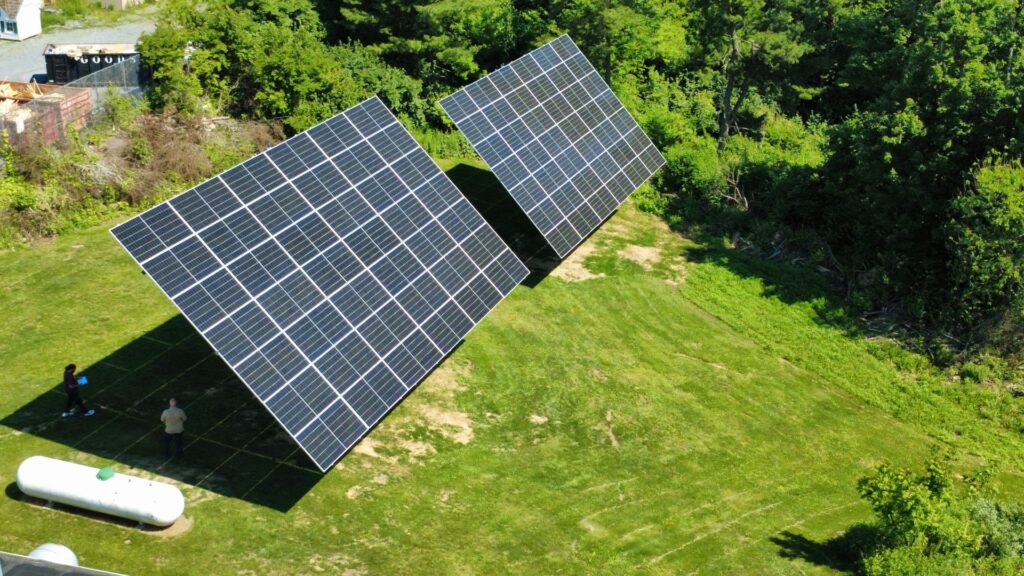
Pole-Mount Arrays
More sun, from sunrise to sunset
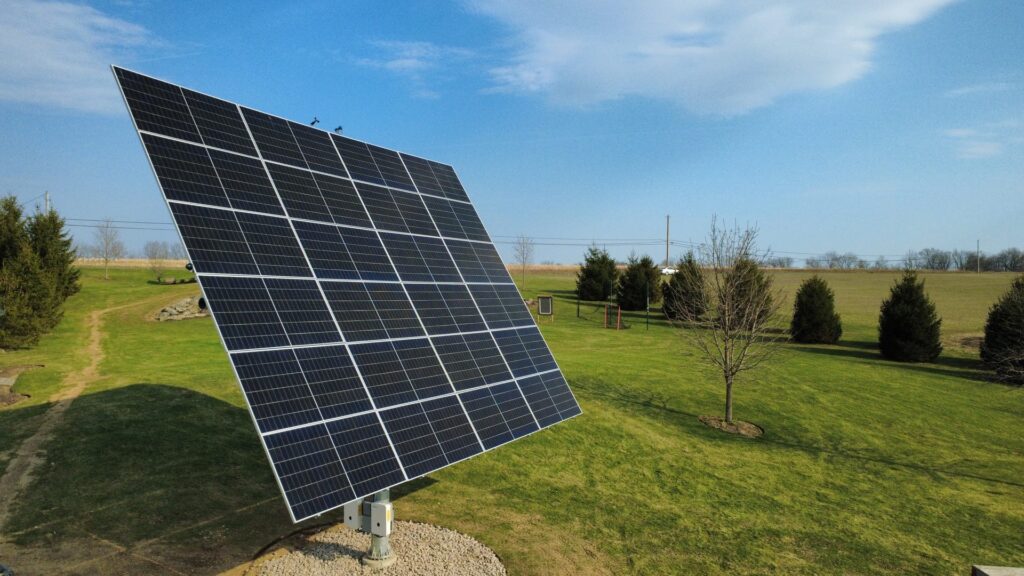
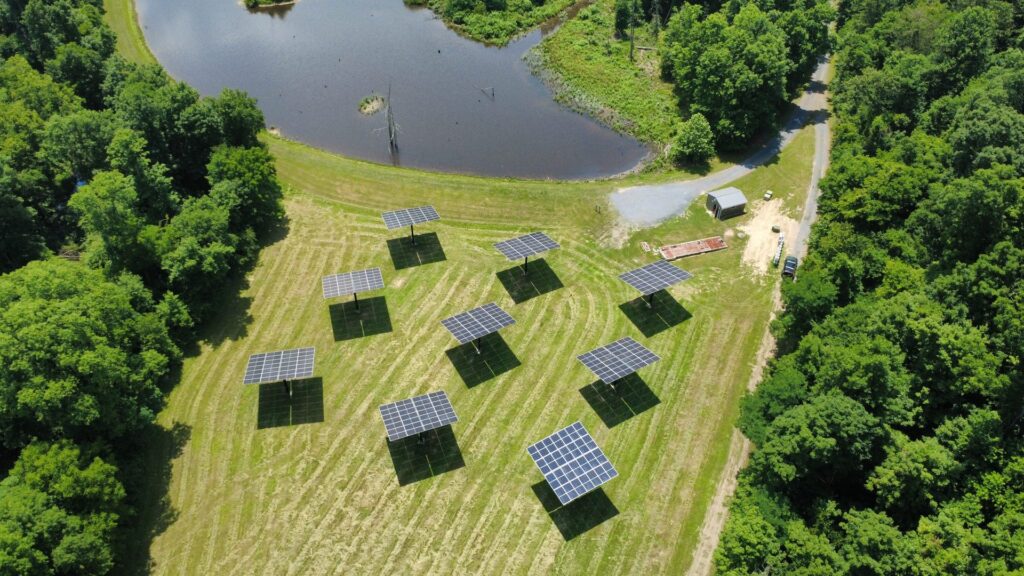
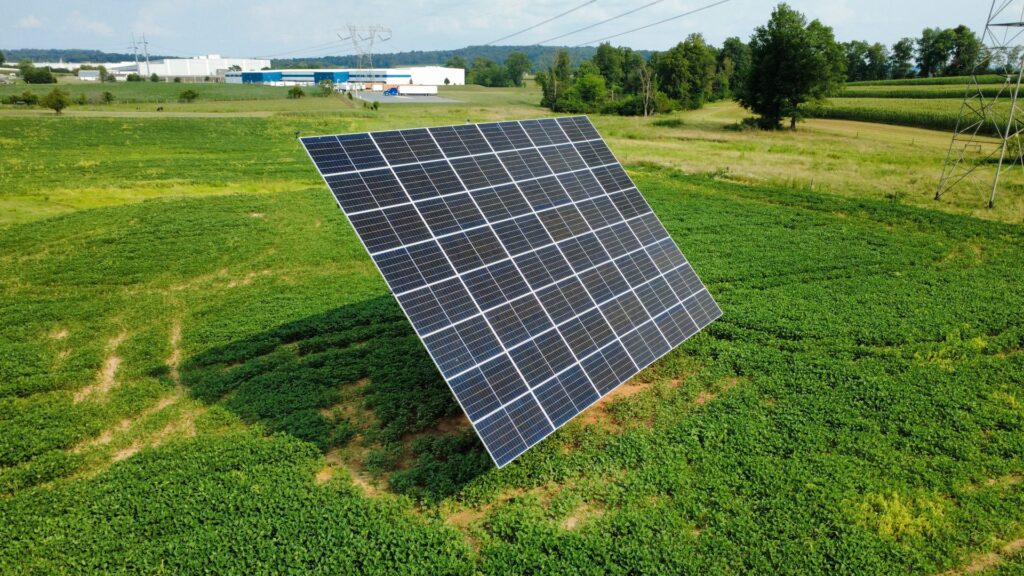
A dual-axis solar tracker is an electromechanical system that continuously adjusts the panels to follow the sun in two dimensions: east to west across the day, and up and down as the sun's altitude changes through the day and through the seasons.
A fixed-tilt array is aimed at one compromise angle, so it points squarely at the sun for only a few minutes a day. A dual-axis tracker keeps the panels near perpendicular to the sun almost continuously. That alignment typically delivers 35% to 45% more energy per installed panel than a comparable fixed-tilt system.
What that means in practice
Simple, compact foundations
Dual-axis trackers are pole-mounted, and the foundation is less involved than most people expect. A common design is an inverted-T ballast foundation that only goes down about 3 to 4 feet. We choose the right foundation for each site based on soil conditions and project requirements.
Inverters mounted on the pole
Inverters can be mounted right on the tracker pole itself. That means:
- Nothing has to be mounted to a building.
- DC wiring runs are shorter.
- No separate inverter rack is needed.
Because these are ground-mounted systems, they are also generally not subject to the rapid shutdown requirements that apply to rooftop arrays. Less equipment to install can help offset the higher cost of the tracker itself.
Ground clearance
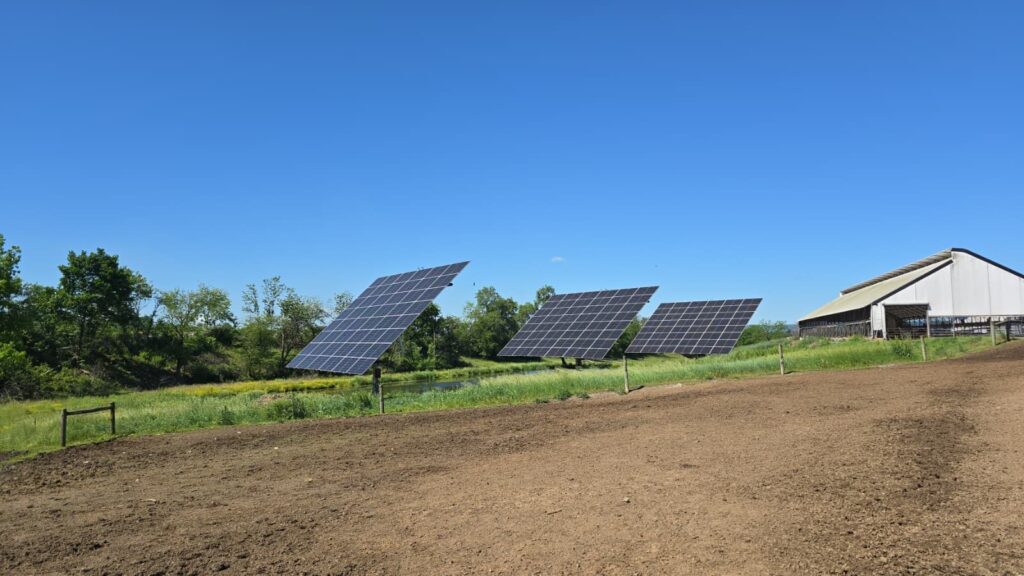
If a site requires a minimum clearance under the array, for livestock, mowing, equipment access, vehicles in a parking lot setting, or local requirements, we have two ways to handle it:
- Program a maximum tilt limit into the tracker so the panels never swing below the required height.
- Raise the array by building the foundation pier higher out of the ground.
Built for weather
Trackers automatically stow themselves in high wind to protect the equipment. When the trackers tilt, any snow accumulation tends to slide off relatively quickly.
Quiet operation
Trackers are not silent, but they are quiet. Every so often, a tracker makes a brief noise as it repositions, no louder than a battery-powered drill in an open field. Most of the day, you won't hear anything at all.
No glare
Because a tracker keeps the panels aimed directly at the sun, sunlight is reflected back toward the sun rather than toward neighbors, passing drivers, or nearby buildings. Solar glass is also designed to absorb light, not reflect it. The result is a system that is essentially glare-free.
Site requirements
Trackers need an accessible, reasonably flat area for installation. We bring in the equipment needed to erect them, including a crane, so the site has to allow access for it. Before we quote a project, we evaluate the location for access, grade, and layout.
A premium product that gets noticed
Dual-axis trackers are a premium solution, and they draw attention. Passersby often stop to watch the panels move through the day. For a farm, business, church, camp, school, or home, a tracker array is a visible statement about how you run your operation.
Wondering if a tracker fits your property? Let's take a look at your site.

Have Questions? Call us at 877-345-2470
We want to ensure you are well-informed about our product line and how it can save you money on your monthly energy bills.