
How Solar Panels Are Made: What’s Inside, How They’re Built, and How They’re Tested
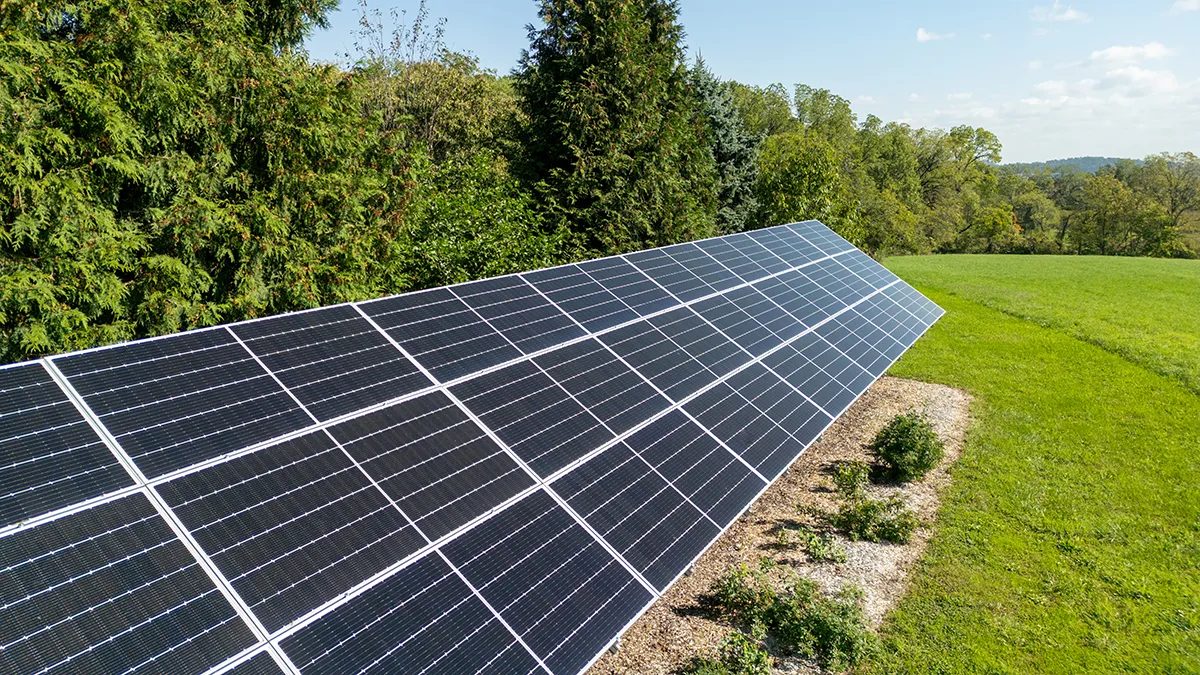
A solar panel looks simple from the ground, but inside it is a carefully layered piece of engineering built to make power through summer heat and winter snow for 25 years or more. Knowing how a panel is built and tested makes it easier to compare quotes, read a spec sheet and understand what the wattage on the label really means.
What’s Inside a Solar Panel
Solar cells. The cells are the thin squares of silicon that turn sunlight into electricity. Most panels sold today use n-type TOPCon cells, which add an ultra-thin passivating layer that reduces energy losses, so the cell converts more of the light it receives and holds up better in hot weather. Heterojunction (HJT) cells offer similar benefits, and back-contact (BC) cells, which move all the wiring to the rear so nothing shades the front, are the newest premium design. N-type cells are also nearly free of light-induced degradation, a small power loss that can otherwise show up in a panel’s first weeks of sun.
Panel sizes. Residential panels are sized to fit a roof and are typically in the 430- to 450-watt range today. Larger commercial and ground-mount panels range from about 540 to 700 watts and get their extra output from size as well as efficiency. A 590-watt panel, for example, uses 144 half cells cut from 182-millimeter wafers in a panel about 7.5 feet long.
Half-cut cells. Most modern panels use cells cut in half. Each half carries half the current, and because resistive losses rise with the square of the current, the panel wastes less energy as heat. The split layout also helps the panel cope better with partial shade.
Glass. The front is tempered or heat-strengthened glass, usually with an anti-reflective coating that lets more light reach the cells.
Encapsulant. The cells are sealed between two sheets of encapsulant, traditionally EVA (ethylene vinyl acetate) and increasingly POE (polyolefin elastomer). It holds the cells in place, cushions them and keeps out moisture.
Backsheet or rear glass. Behind the cells is either a tough polymer backsheet or a second sheet of glass. Glass-glass panels are very rigid and moisture-resistant, and with clear rear glass they can collect reflected light from behind, which makes them bifacial.
Frame. An aluminum frame adds stiffness, gives the racking something to clamp to and helps the panel carry snow and wind loads.
Junction box and bypass diodes. The sealed box on the back connects the panel to the cables running to your inverter or optimizers. Inside are bypass diodes, usually three, which let current flow around a shaded section so the rest of the panel keeps producing.
How Solar Panels Are Made
Polysilicon and ingots. It starts with polysilicon, silicon refined to extremely high purity. It is melted, and a seed crystal is slowly drawn out of the melt to grow one large, continuous crystal called an ingot, which is why the cells are called monocrystalline.
Wafers. The ingot is squared off and sliced with diamond wire into wafers thinner than a credit card.
Cells. Each wafer then goes through several steps:
- Texturing: the surface is etched into tiny pyramids that trap light instead of reflecting it.
- Doping: elements such as phosphorus or boron are diffused into the silicon to create the junction that separates electrical charges when light hits the cell.
- Anti-reflective coating: a thin layer, often silicon nitride, gives cells their dark blue or black color and helps them absorb more light.
- Metallization: fine silver lines called fingers and busbars are printed on the cell to collect the current and carry it away. Newer cells use many thin busbars instead of a few wide ones, which shortens the current’s path and shades less of the cell.
Stringing and tabbing. Thin copper ribbons (tabbing) are soldered across the cells to connect them in series strings.
Layup. The glass, encapsulant, cell strings, a second layer of encapsulant and the backsheet or rear glass are stacked in order.
Lamination. The stack goes into a laminator, which uses heat and vacuum to melt the encapsulant and bond everything into one sealed unit.
Framing and junction box. The aluminum frame is attached with sealant, and the junction box is bonded to the back.
Bifacial Panels: Power From Both Sides
A bifacial panel makes most of its power from the front, plus a bonus from light reflected onto the back. That bonus grows with brighter ground (snow and light gravel reflect far more than grass), more height and more open space behind the panel, which is why bifacial panels shine on ground mounts and trackers. NREL research on single-axis trackers found bifacial panels made about 4 to 15 percent more energy than single-sided panels, roughly 9 percent on average. On a roof, a few inches above the shingles, the gain is modest, though the glass-glass build still adds durability.
Flash Testing: How a Panel Gets Its Wattage
Every finished panel goes under a flash tester, a solar simulator that fires a brief, calibrated pulse of artificial sunlight. The measurement is made at Standard Test Conditions (STC):
- Light intensity of 1,000 watts per square meter
- Cell temperature of 25°C (77°F)
- A light spectrum called AM1.5, which represents sunlight after it passes through about 1.5 times the thickness of the atmosphere
During the flash, the tester sweeps the panel across its voltage range and records the current at each point, producing an IV (current-voltage) curve. The point where current times voltage is highest is the panel’s maximum power, and that becomes the nameplate wattage.
Power binning and positive tolerance. Panels from the same production line come out slightly different, so manufacturers sort them into power bins, such as 430, 435 and 440 watts for a residential panel, or 585, 590 and 595 watts for a larger commercial one. Most now use positive-only tolerance. Our current large bifacial panels are rated 0 to plus 4.99 watts, so a 590-watt panel tests at no less than 590 watts. Datasheets also note a small measurement tolerance for the test equipment itself, often about plus or minus 3 percent.
Testing the back side. Bifacial panels are also measured from the rear. Rear output as a share of front output is called bifaciality, about 80 percent on the n-type panels we install now.
Why real-world output is lower. STC is a lab benchmark, not a sunny day on your roof. In real life, panels run warmer than 25°C and sunlight is usually less intense, so datasheets also list output at more realistic conditions (NMOT or NOCT, at 800 watts per square meter). Your production estimate already accounts for this, using your roof’s orientation, shading and local weather. Our solar panel performance page explains the factors that affect output in more detail.
Other Quality Checks Before a Panel Ships
Electroluminescence (EL) imaging. Current is run through the panel so the cells glow faintly in infrared, and a special camera photographs them. Microcracks and weak cells show up as dark lines or patches, so flawed panels are caught at the factory instead of on your roof.
Insulation and hi-pot testing. Panels are tested at high voltage to confirm that the insulation between the live electrical parts and the frame is sound, an important safety check for a product that lives outdoors.
Certification testing. Before a panel model can be sold, samples must pass certification programs such as IEC 61215 and UL 61730, which include thermal cycling, damp heat and mechanical load tests.
Why This Matters When You Choose Panels
Degradation. Every panel slowly produces a little less over time. Today’s n-type panels are warranted to lose only about 0.4 percent a year after the first year, and careful manufacturing is what keeps that number low.
Warranties. Panels usually carry two warranties. The product warranty covers defects in materials and workmanship. The performance warranty guarantees how much power the panel will still make. On the panels we currently offer, most performance warranties guarantee about 87 percent of rated output at year 30. Our current large n-type panels allow only a 1 percent loss in year one and 0.4 percent a year after that. Our solar warranty page breaks down both types and the extended coverage available.
Quality manufacturers. The panels on our current spec sheets come from established manufacturers such as SEG Solar, Axitec, Phono Solar and Qcells, and most of them use n-type TOPCon or similar high-efficiency cells. Every proposal lists the exact panel model and its warranty, so you know what you are getting. You can see how we install them on our roof-mounted solar panels page.
Solar Panel FAQs
What does “STC” mean on a solar panel datasheet?
STC stands for Standard Test Conditions, which give every panel the same yardstick: 1,000 watts per square meter of light, a 25°C cell temperature and the AM1.5 spectrum.
What is a bifacial solar panel?
It is a panel that collects light on both sides, usually with glass front and back. The rear-side boost is largest on ground mounts and trackers and modest on a typical roof.
What is a TOPCon solar cell?
TOPCon (tunnel oxide passivated contact) is the n-type cell design used in most panels sold today. An ultra-thin passivating layer cuts energy losses, so the cell converts more sunlight into electricity and holds up better in hot weather.
How long do solar panels last?
Quality panels commonly carry 25- to 30-year performance warranties and today’s n-type panels are warranted to lose only about 0.4 percent of output per year, so they keep producing for decades.
Talk to a Local Solar Installer
Trifecta Solar designs and installs solar for homes, farms and businesses across Central and Eastern PA. To compare panel options, go over a spec sheet together or get an estimate for your property, contact Trifecta Solar.